


TL;DR: Smartphones have become essential tools for 6.8+ billion people worldwide, offering genuine benefits like health monitoring, economic access, and global connectivity—yet they’re also engineered to capture attention through variable reward mechanics that can lead to compulsive use, sleep disruption, and mental health impacts, especially among teens. The key isn’t abandoning these devices but using them intentionally: disable non-essential notifications, keep phones out of bedrooms, set specific usage boundaries rather than vague goals, and model healthy habits for children. Research consistently shows that mindful, purpose-driven smartphone use preserves the benefits while minimizing the documented downsides of distraction, relationship strain, and privacy exposure.
The Device That Changed Everything
I remember the exact moment I realized smartphones had fundamentally altered human behavior. I was sitting across from a dear friend—someone I’d known for fifteen years—mid-conversation, when I caught myself glancing at my phone. Not because anything urgent demanded my attention. Simply because the habit had become automatic, ingrained, invisible.
That moment haunted me. As I began observing more closely, I noticed this pattern everywhere: coffee shops filled with people staring at screens rather than each other, commuters glued to glowing rectangles, family gatherings where relatives sat in the same room yet inhabited different digital worlds. The smartphone had evolved from a tool we consciously chose to use into a constant companion—something we check, touch, and return to dozens of times daily, often without any deliberate intention.
Today, the numbers are staggering. Over 6.8 billion people worldwide use smartphones, representing more than 85% of the global population. No consumer technology in human history has achieved this scale so rapidly. Yet beneath the convenience and connectivity lies a far more complex reality that demands our attention.
In this comprehensive guide, I’ll share insights from over a decade of testing consumer technology, analyzing industry trends, and honestly examining my own relationship with these devices. We’ll explore the genuine benefits smartphones provide, the documented downsides researchers continue to uncover, and practical strategies for maintaining a healthy digital balance in 2025.
The Evolution of Smartphone Dependency: A Decade of Observations
Beyond the Spec Sheet: Behavioral Insights
Over the past ten-plus years, I’ve tested hundreds of smartphones—from budget Android devices to flagship models exceeding $1,500. I’ve tracked battery degradation curves, measured camera performance in low light, and run connectivity benchmarks across diverse real-world environments.
Yet the observations that truly stuck with me weren’t about processing speeds or display refresh rates. They were about human behavior.
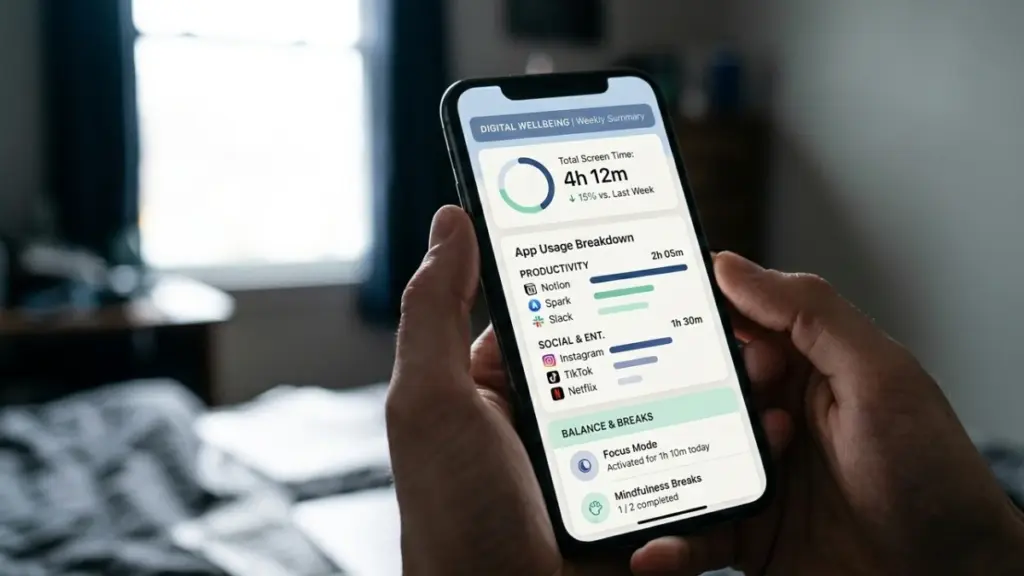
During a two-week personal experiment, I tracked my smartphone usage using both Apple’s Screen Time and Google’s Digital Wellbeing tools. The results were sobering: I averaged four hours and twenty minutes of daily screen time, with 73 separate phone pickups—many lasting under thirty seconds and serving no clear purpose.
What disturbed me wasn’t the total time invested. It was the compulsive nature of these interactions. I wasn’t consciously choosing to use my phone. I was simply… reaching for it. Automatically. Unthinkingly.
The Other Side of the Ledger: Genuine Benefits
Conversely, I’ve witnessed smartphones accomplish genuinely remarkable things. I watched a colleague successfully manage a complex medical condition using integrated glucose monitoring and automated appointment scheduling. I’ve relied on real-time translation applications while traveling through countries where I spoke no local language. I’ve maintained close friendships across twelve time zones—connections that would have faded without the friction-free communication smartphones enable.
The technology itself isn’t inherently problematic. However, the way these devices are engineered—and the patterns many of us have unconsciously developed—creates real trade-offs deserving honest examination.
The Psychology of Engagement: How Smartphones Capture Attention
The Mechanics of Persuasive Design
Smartphones don’t merely deliver notifications; they’re meticulously engineered to make those notifications feel urgent and irresistible. Variable reward schedules, borrowed directly from behavioral psychology research, drive much of modern app design. The unpredictability of what awaits when you open an app—a message, a like, breaking news, a comment—creates a low-level compulsion to check repeatedly.
This isn’t conspiracy theory. It’s a documented design approach with an established academic name: persuasive technology. Researchers at Stanford University, notably B.J. Fogg, have studied these mechanisms for decades. Their findings are unambiguous: systems delivering unpredictable rewards at variable intervals generate significantly more engagement than predictable alternatives.
Platform Responses and Persistent Challenges
Most smartphone operating systems now include tools designed to counter these patterns: Screen Time on iOS, Digital Wellbeing on Android, and Focus modes across both platforms. These features exist precisely because the platforms themselves recognized the growing problem.
However, the underlying applications—many funded by advertising revenue and therefore incentivized by engagement metrics—continue pushing in the opposite direction. The tension between platform-level wellness features and app-level engagement optimization remains unresolved.
The Positive Impact: What Smartphones Genuinely Enable
Democratization of Essential Services
Modern smartphones integrate GPS navigation, environmental sensors, high-quality cameras, communication tools, health monitors, and access to humanity’s collective knowledge into a device fitting in your pocket. For individuals in low-income or geographically isolated regions, smartphones often represent the first accessible entry point to banking services, healthcare information, and educational resources.
Health Monitoring Revolution
Health monitoring capabilities have transcended gimmick status. Continuous heart rate monitoring, blood oxygen tracking, and ECG functionality on flagship devices have identified serious medical conditions in asymptomatic users. These aren’t isolated incidents—Apple has documented thousands of cases where its Watch and iPhone features alerted users to conditions requiring immediate medical attention.
Economic Empowerment
Mobile banking applications, gig economy platforms, and small business management tools have democratized entrepreneurship globally. In developing economies, smartphones enable micro-businesses to reach customers, process payments, and manage operations previously requiring substantial infrastructure investments.
The Real-World Trade-offs: A Balanced Assessment
Where Smartphones Genuinely Improve Life
| Benefit Category | Specific Applications |
|---|---|
| Communication & Access | Maintaining relationships across distances, supporting professional networks不受地理限制 |
| Health Management | Chronic condition monitoring, medication reminders, emergency response, telehealth access |
| Economic Participation | Mobile banking, gig economy access, small business tools, financial inclusion |
| Emergency Safety | Real-time navigation, emergency calls, location sharing, crisis response |
| Learning & Information | Language apps, academic resources, news access, skill development platforms |
Where Research Identifies Genuine Concerns
Mental Health Implications Multiple peer-reviewed studies now correlate heavy smartphone use—particularly social media consumption—with elevated rates of anxiety and depression, especially among adolescents. The correlation is strong enough that major health organizations have issued specific guidelines.
Sleep Disruption Blue light emitted by smartphone screens combined with cognitive stimulation from late-night use links directly to delayed sleep onset and reduced sleep quality. The impact on circadian rhythms is well-documented.
Attention Fragmentation Research from UC Irvine demonstrates that recovering full concentration after an interruption requires an average of 23 minutes. Given that most smartphone notifications are explicitly designed to interrupt, the productivity cost is substantial.
Relationship Quality Studies on “phubbing” (phone snubbing) reveal measurable decreases in relationship satisfaction when partners use phones during conversations. The mere presence of a smartphone on the table reduces perceived empathy and connection quality.
Privacy Exposure The average smartphone application requests access to significantly more personal data than necessary for functionality—and most users grant these permissions without reading them, creating substantial privacy vulnerabilities.
The Numbers That Matter: 2025 Statistics
Understanding the scale of smartphone integration helps contextualize both benefits and risks:
- Average daily smartphone use: Approximately 4 hours and 25 minutes globally (DataReportal, 2024)
- Morning dependency: Over 60% of users check their phone within five minutes of waking (Morning Consult)
- Separation anxiety: Approximately 40% of adults report feeling anxious when unable to access their phone
- Adolescent usage: Teenagers average 7+ hours of daily screen time, with smartphones accounting for the majority
These statistics don’t indicate personal weakness or moral failure. They reflect how effectively modern devices and applications compete for human attention. Understanding these mechanisms enables more intentional responses.
Practical Strategies for Healthier Smartphone Relationships
For Everyday Users
The single most effective change I’ve implemented—and the recommendation I offer most consistently—is disabling all non-essential push notifications. Not silencing them. Completely removing them from applications that don’t genuinely require real-time access to your attention.
After making this change personally, my daily phone pickups dropped from over 70 to under 30 within one week. The device transformed from a constant interruption source into a tool I used deliberately and intentionally.
Recommended Actions:
Audit notifications monthly — Retain only those requiring immediate attention
Establish usage baselines — Use built-in tracking tools before attempting behavioral changes
Implement phone-free wind-down — Maintain at least one hour of screen-free time before bed
Increase friction strategically — Move social media apps to secondary screens or folders
Common Pitfalls to Avoid:
Vague goals — Replace “use phone less” with specific targets: “no phones at dinner” or “30-minute daily social media limit”
Relying solely on willpower — Utilize built-in screen time limits; they work by removing decision-making from the moment of temptation
Bedroom charging — Move chargers across the room or outside the bedroom entirely
For Parents and Families
The evidence linking adolescent mental health and smartphone use warrants genuine caution. This doesn’t require device bans—it demands intentionality regarding when, how, and for what purposes phones integrate into family life.
Evidence-Based Recommendations:
- Delay social media access until at least age 14, preferably later—recommendations increasingly supported by pediatric health organizations
- Maintain phone-free bedrooms for all family members, not just children
- Model desired behavior — Children observe adult phone habits more attentively than they respond to verbal instructions
For Professionals and Knowledge Workers
Smartphones have created an expectation of constant availability—a boundary erosion with measurable costs for productivity and wellbeing.
Professional Boundaries:
- Define communication windows — Share specific availability periods with colleagues; responsiveness doesn’t require 24/7 accessibility
- Utilize Focus modes — Schedule Do Not Disturb periods during deep work; research consistently shows multitasking significantly reduces output quality
- Protect lunch breaks — Treat phone-free meal periods as genuine recovery time; afternoon productivity demonstrably improves
Frequently Asked Questions
Are smartphones actually addictive?
The clinical picture is more nuanced than the term “addictive” suggests. Smartphones don’t produce chemical dependencies comparable to substances. However, the compulsive use patterns many describe—repeated checking without purpose, anxiety when separated from the device, difficulty stopping—share structural similarities with behavioral addictions.
Researchers increasingly employ the term “problematic smartphone use” to describe these patterns without overstating comparisons to substance addiction.
How much daily smartphone use is considered healthy?
No universal threshold exists, and research emphasizes quality over quantity. Two hours of video calls with loved ones differs fundamentally from two hours of passive social media scrolling.
The more useful question: Is your smartphone use intentional and purposeful, or compulsive and automatic? One week of usage tracking typically reveals which category dominates your screen time.
Can smartphones genuinely improve health outcomes?
Yes—and the evidence continues growing. For individuals managing chronic conditions like diabetes, hypertension, or cardiac arrhythmias, smartphone-connected health devices demonstrate measurable improvements in monitoring and early intervention. Telehealth access through smartphones has improved healthcare equity in underserved regions.
The caveat: Passive health tracking (steps, sleep estimates, general wellness scores) remains far less clinically validated than condition-specific monitoring.
Do blue light filters actually help with sleep?
Research has become more nuanced than marketing suggests. While blue light contributes to sleep disruption, the cognitive stimulation of content itself—checking messages, reading news, watching videos—likely plays a larger role.
Blue light filters may provide marginal benefits, but they don’t substitute for putting the phone down well before bedtime. The most evidence-backed approach for improved sleep remains a phone-free bedroom environment.
Is social media the primary problem, or smartphones broadly?
Research points most strongly toward social media—particularly platforms built around social comparison, infinite scrolling, and notification-driven re-engagement. Smartphones used primarily for calls, navigation, and work tools show weaker associations with negative outcomes.
The device itself is largely neutral; the applications and their embedded design choices drive most observed impacts.
The Path Forward: Conscious Technology Use
After more than a decade of professional and personal smartphone use, I’ve arrived at a position of clear-eyed appreciation. These devices have accomplished matters of genuine significance—connecting people, democratizing access, saving lives, and creating possibilities that previously didn’t exist.
Simultaneously, the design systems powering many smartphone applications work against our interests in ways subtle enough to overlook yet powerful enough to reshape our attention, relationships, and sense of normalcy.
The objective isn’t reduced phone usage as an end in itself. The goal is usage on your terms—intentionally, purposefully, with awareness of the mechanisms constantly attempting to pull you back.
Start with notifications. Then address sleep boundaries. Build from there.
The smartphone isn’t disappearing, nor is research into its effects on human wellbeing. The most valuable action any of us can take right now is simply paying attention—which, fittingly, is precisely what these devices are engineered to make more difficult.
Conclusion: Reclaiming Attention in the Digital Age
The smartphone represents one of humanity’s most powerful tools and most challenging relationship dynamics. Like any transformative technology, it offers tremendous potential for benefit alongside genuine risks requiring active management.
The individuals and families thriving in our increasingly connected world share common characteristics: intentionality about usage patterns, clear boundaries protecting sleep and relationships, and ongoing willingness to reassess and adjust their digital habits.
The question isn’t whether smartphones will remain central to modern life—they will. The question is whether we’ll use them consciously or allow their design to dictate our behavior unconsciously.
Choose consciousness. Start today.
